Centralized client state
Redux provides a predictable place for authentication and shared application state instead of threading state through unrelated component trees.
A property discovery experience built around practical CRUD flows
A MERN real-estate application with authentication, Google OAuth, property listings, search-oriented UI, Redux state, and MongoDB persistence.
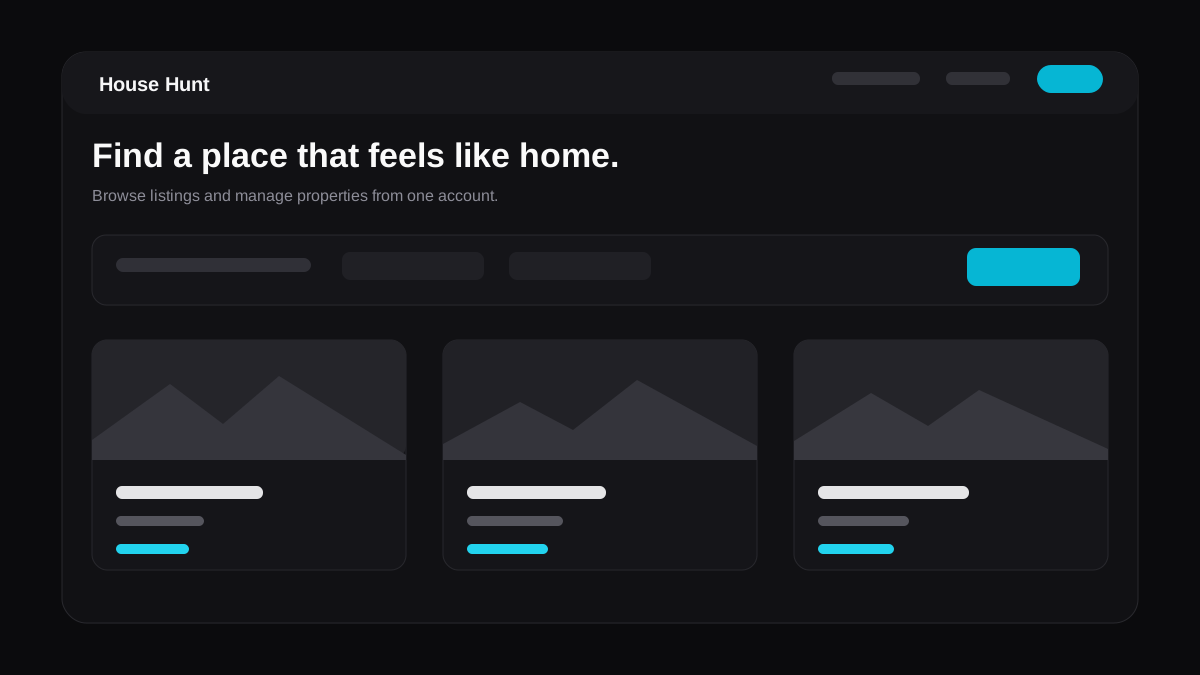
House Hunt is a full-stack real-estate application that lets users authenticate, create and manage property listings, and browse available properties through a single web experience. It was built as a practical end-to-end MERN project covering frontend state, API design, authentication, and database-backed CRUD operations.
Redux provides a predictable place for authentication and shared application state instead of threading state through unrelated component trees.
Listing mutations are associated with an authenticated user so editing and deletion are not treated as anonymous CRUD operations.
The interface needs to react consistently when a user signs in, signs out, or completes an OAuth flow.
Authentication state is centralized and used to drive protected actions and account-aware UI.
A property listing should not be modifiable simply because its database ID is known.
Mutation flows connect listings to their owner and require authenticated requests for management operations.